Participation in River Flow 2026 in Thessaloniki, Greece
Participation in River Flow 2026 in Thessaloniki, Greece
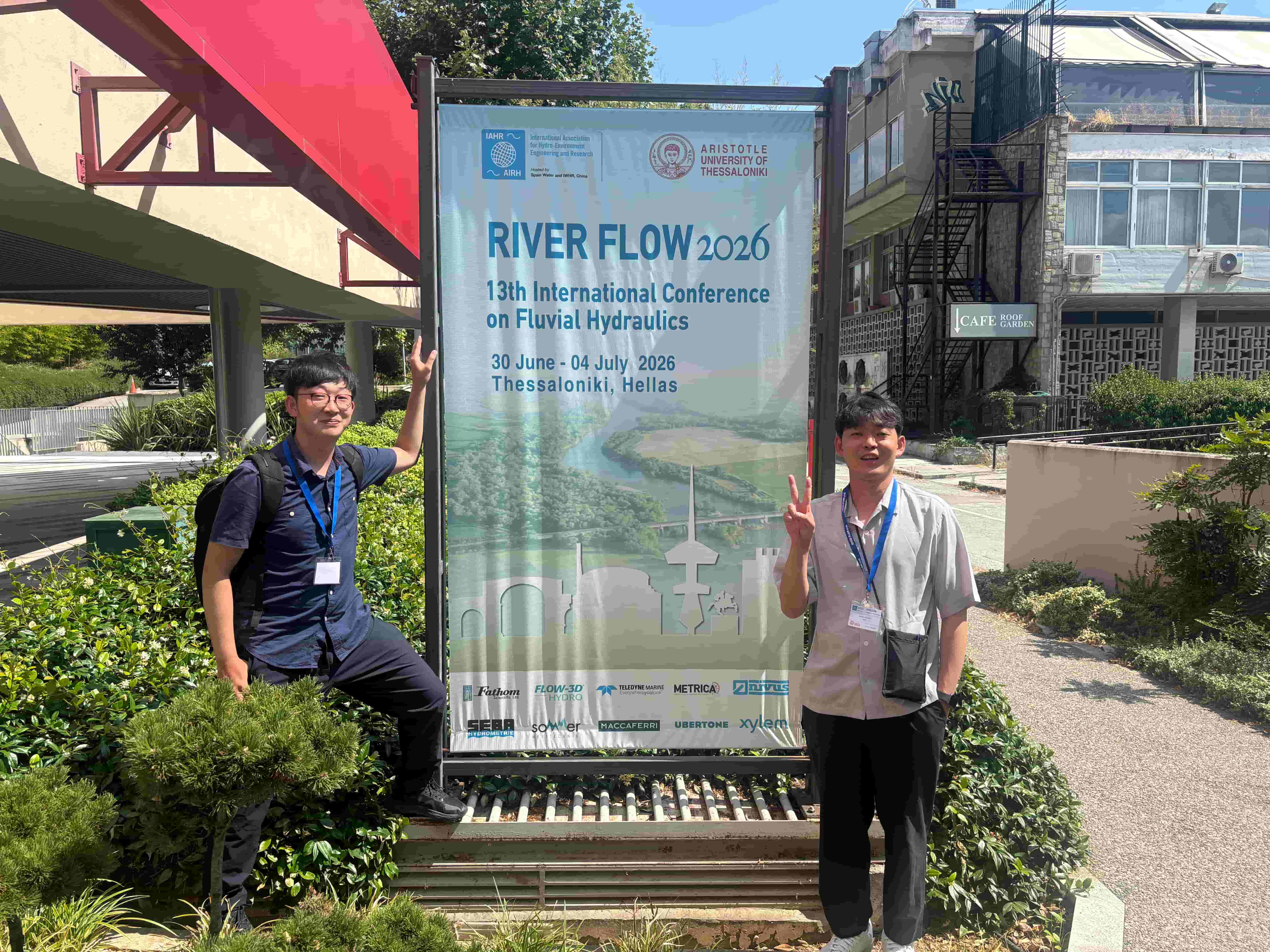
From June 30 to July 3, 2026, Assistant Professor Takashi Inoue and Kazuki Ito (D1) participated in River Flow 2026, held in Thessaloniki, Greece.
River Flow is an international conference held every two years in the fields of hydraulics and river engineering. The conference covers a wide range of topics, including flow dynamics, sediment and material transport, their interactions with hydraulic structures, and morphological changes associated with flow and sediment transport.
This year, the conference was jointly held with the 16th International Symposium on River Sedimentation (ISRS), resulting in an exceptionally large number of presentations and making it a highly rewarding conference.
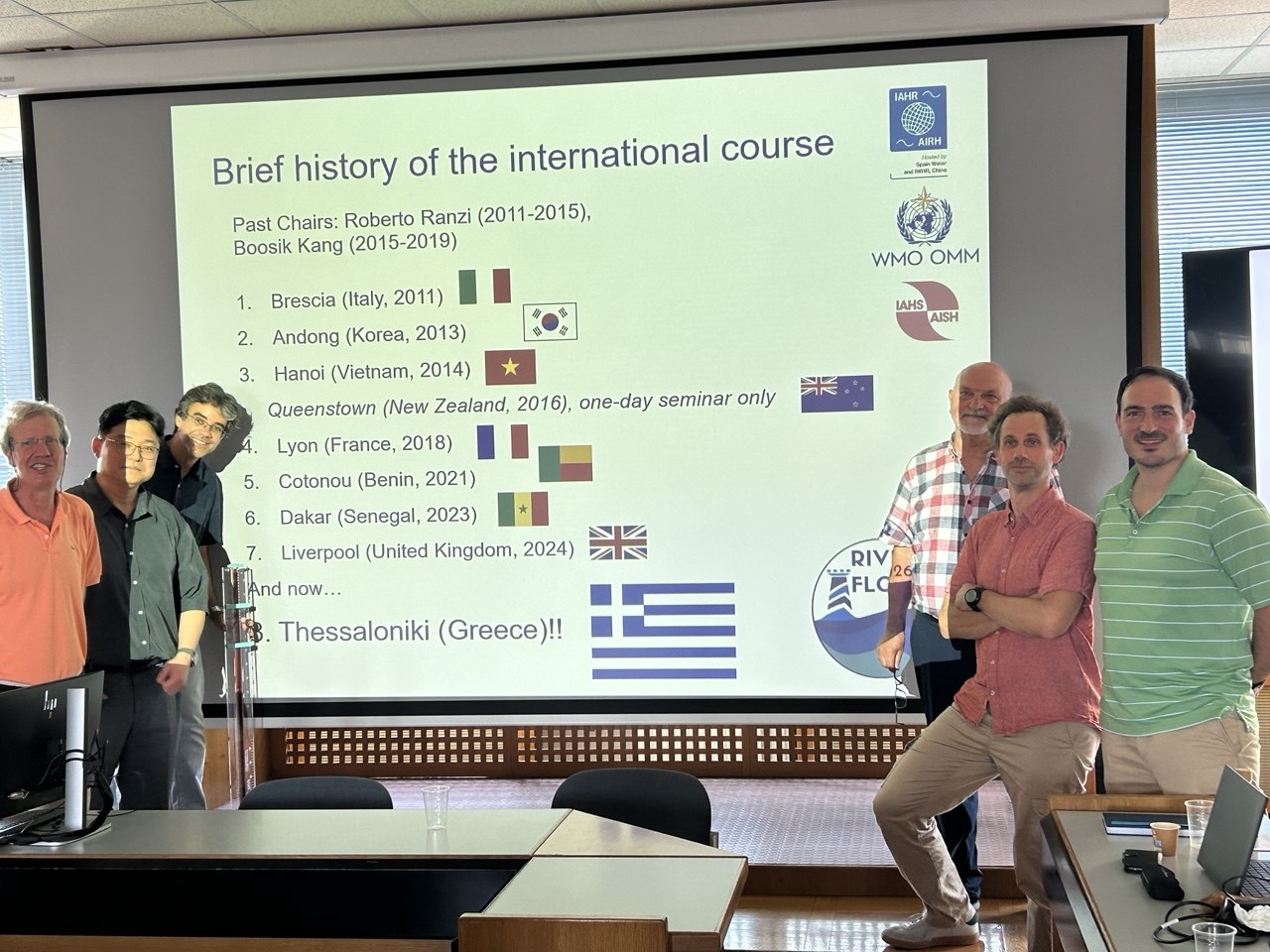
8th IAHR/WMO/IAHS International Stream Gauging Course
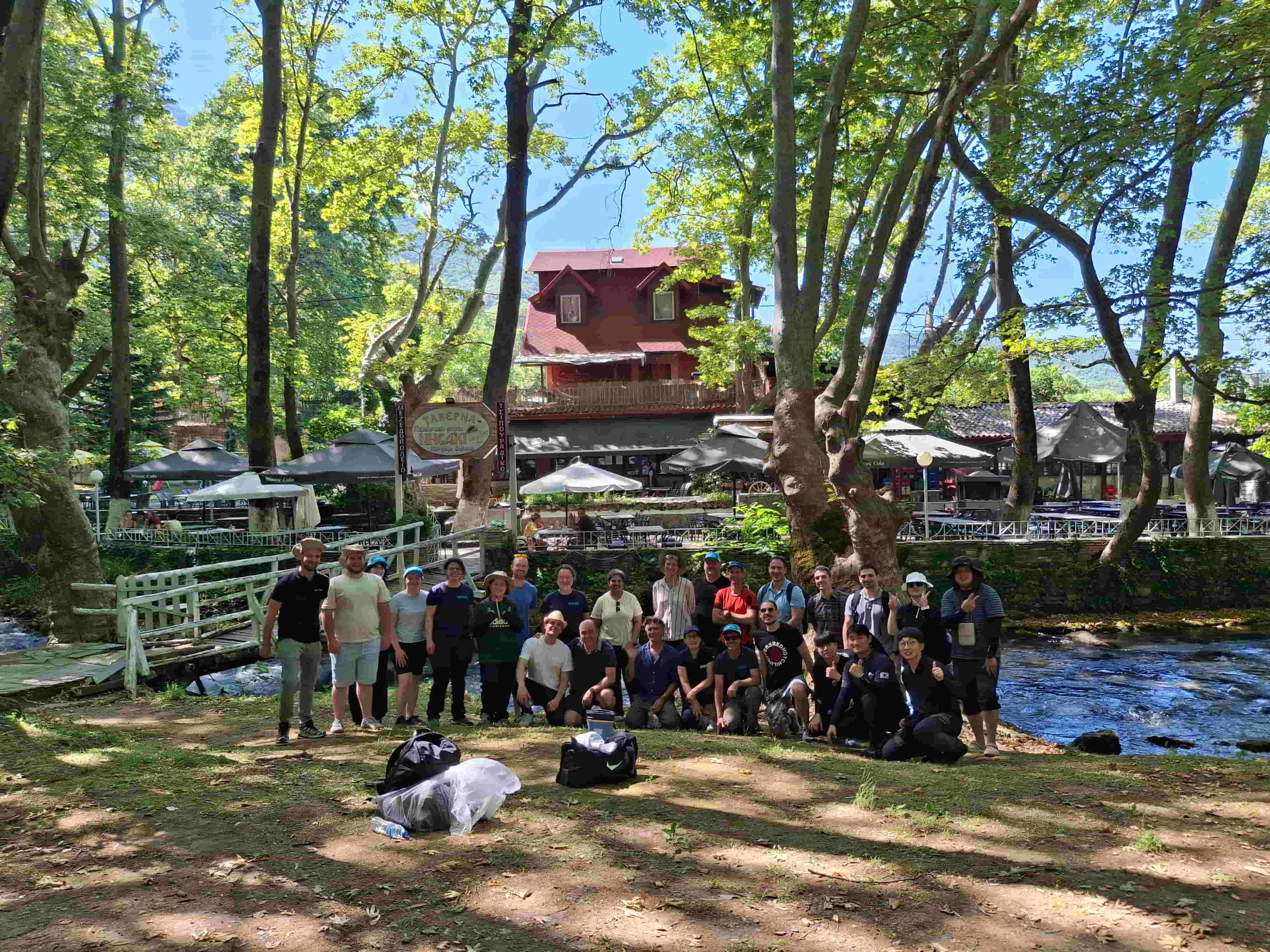
Prior to the conference, the 8th IAHR/WMO/IAHS International Stream Gauging Course, a three-day workshop on streamflow measurement, was held. Since the workshop was closely related to my research and I have a strong interest in streamflow measurement, I arrived in Thessaloniki a few days early to participate.
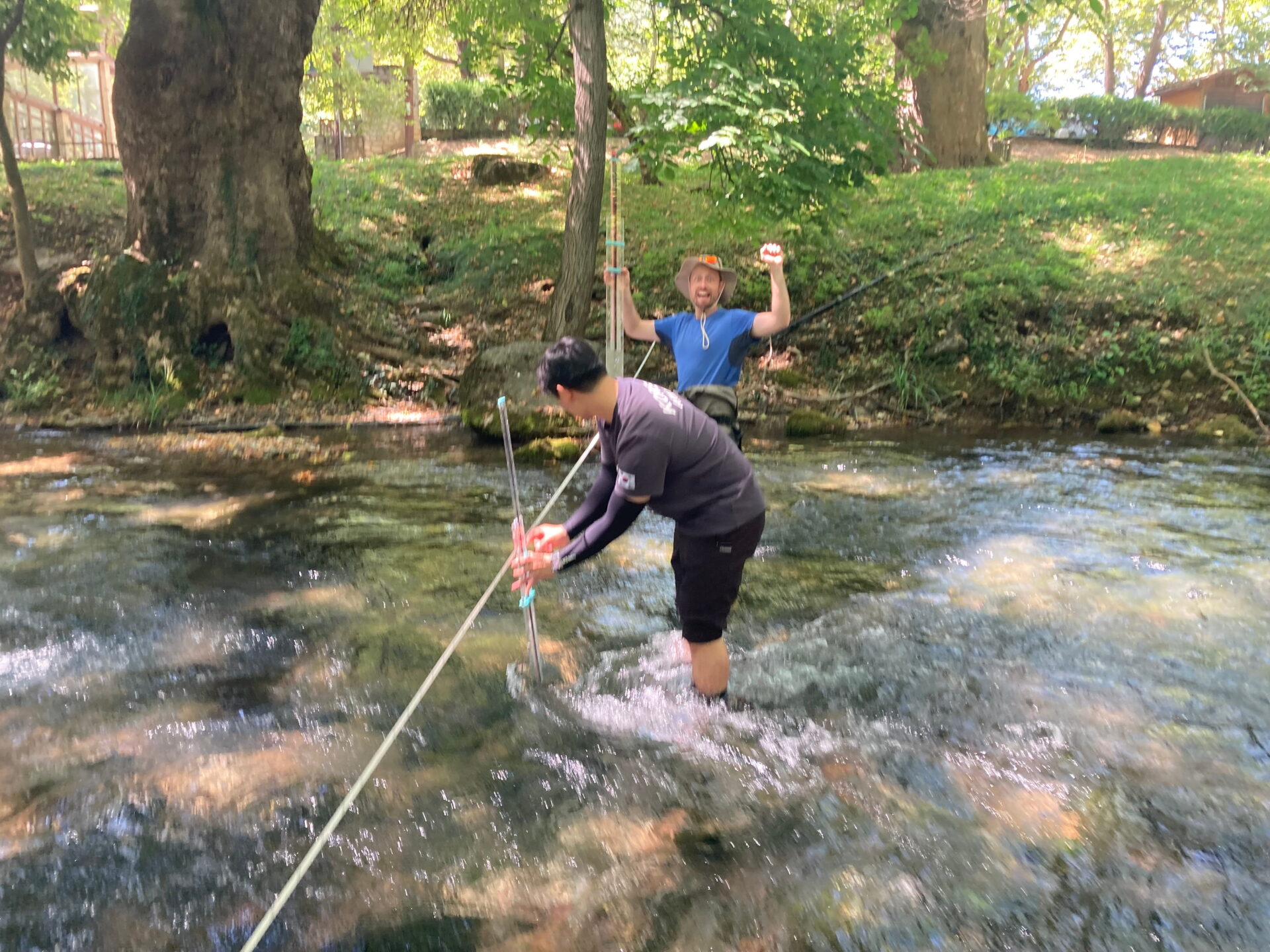
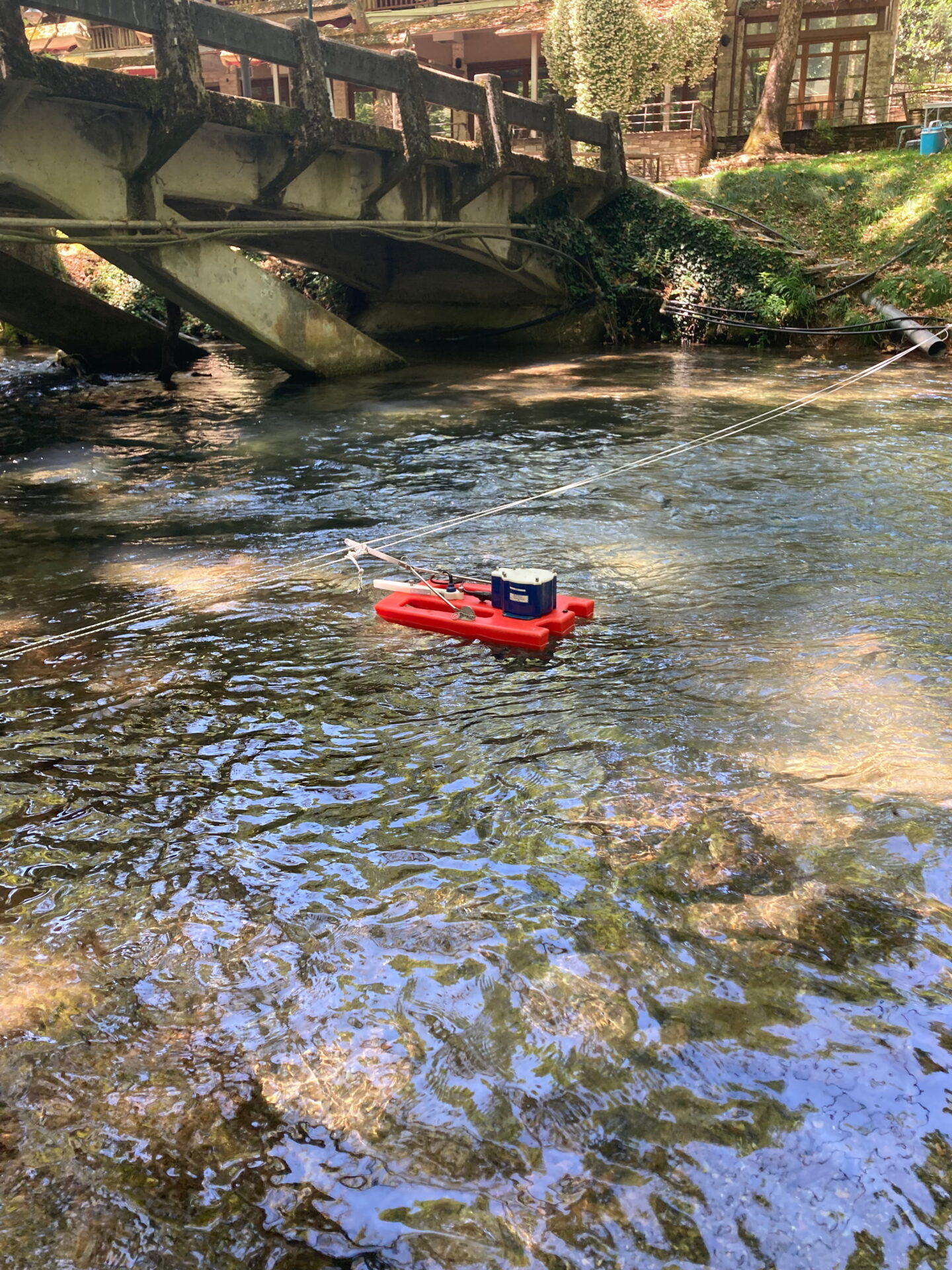
On the first day, we learned the fundamentals of streamflow measurement, including various methods for measuring flow velocity and water depth, as well as the stage-discharge (H-Q) relationship. On the second day, we visited a local river and estimated streamflow using several of the measurement techniques introduced on the first day. On the final day, lectures focused on uncertainty analysis in streamflow measurements, particularly regarding H-Q relationships, comparisons of discharge estimates obtained using different measurement methods, and various practical applications.
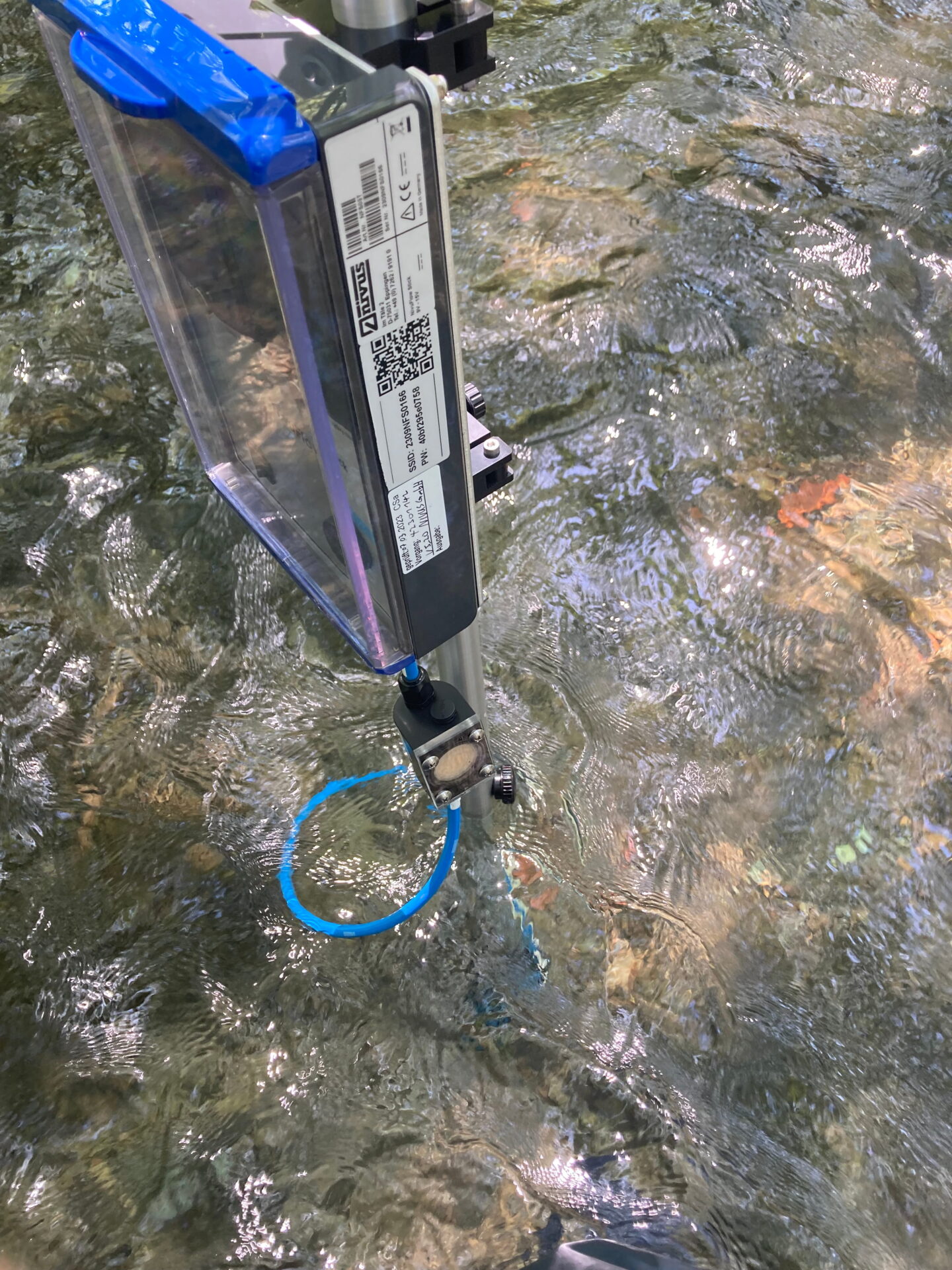
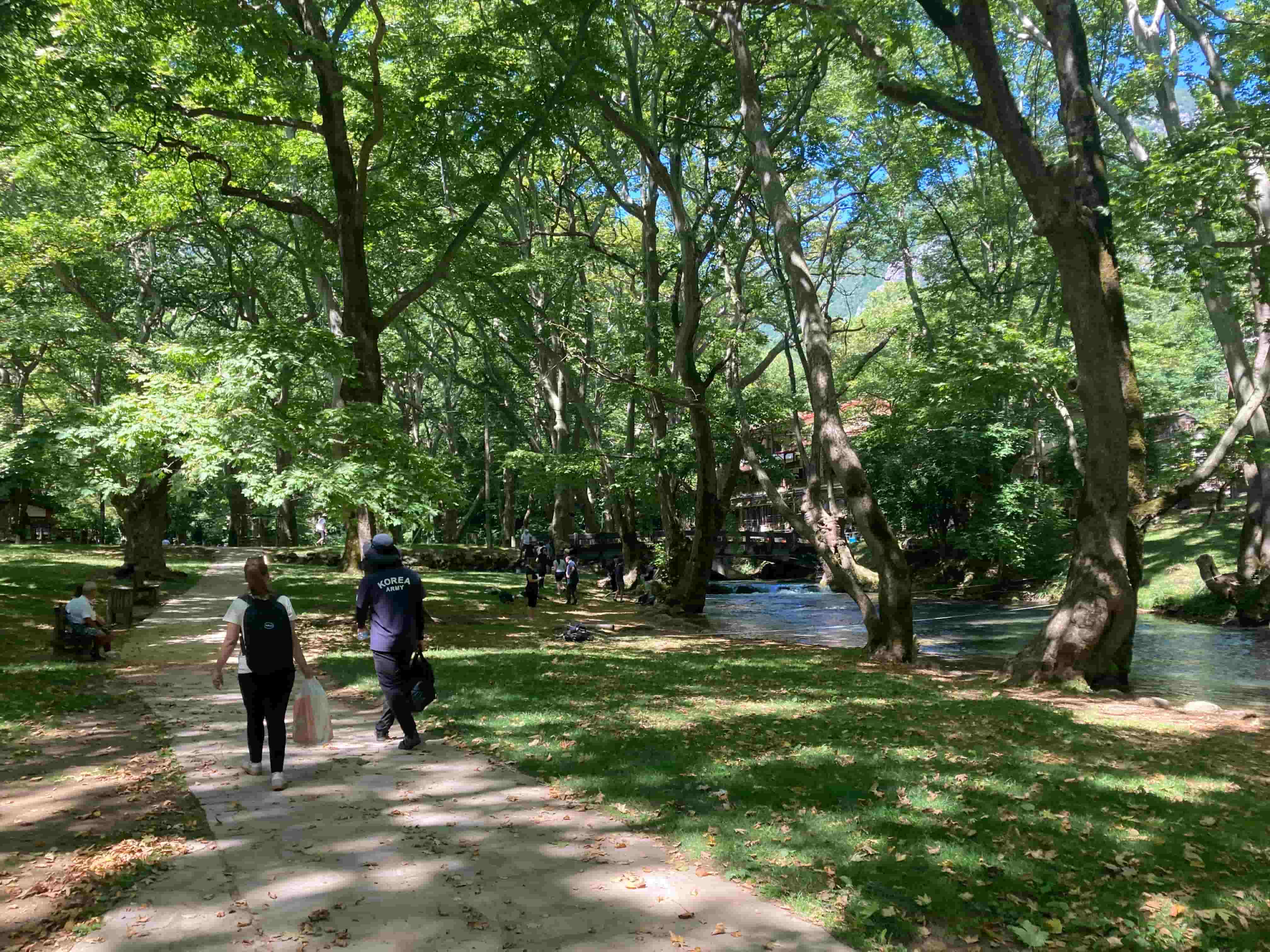
One of the most valuable experiences was observing ADCP measurements in the field and examining the collected data firsthand. It was my first opportunity to see the entire measurement process in practice. I was also excited simply to visit and enter a river overseas, especially one that appeared to be a steep upstream reach with highly turbulent free-surface conditions.
Streamgauging Rulers
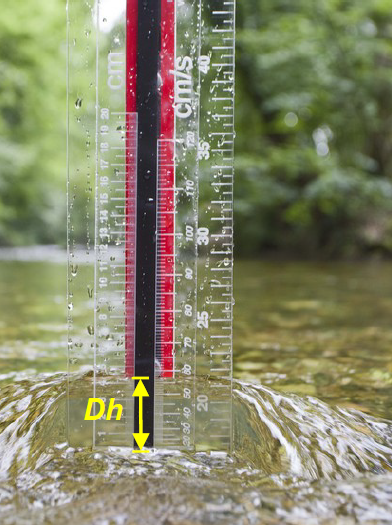
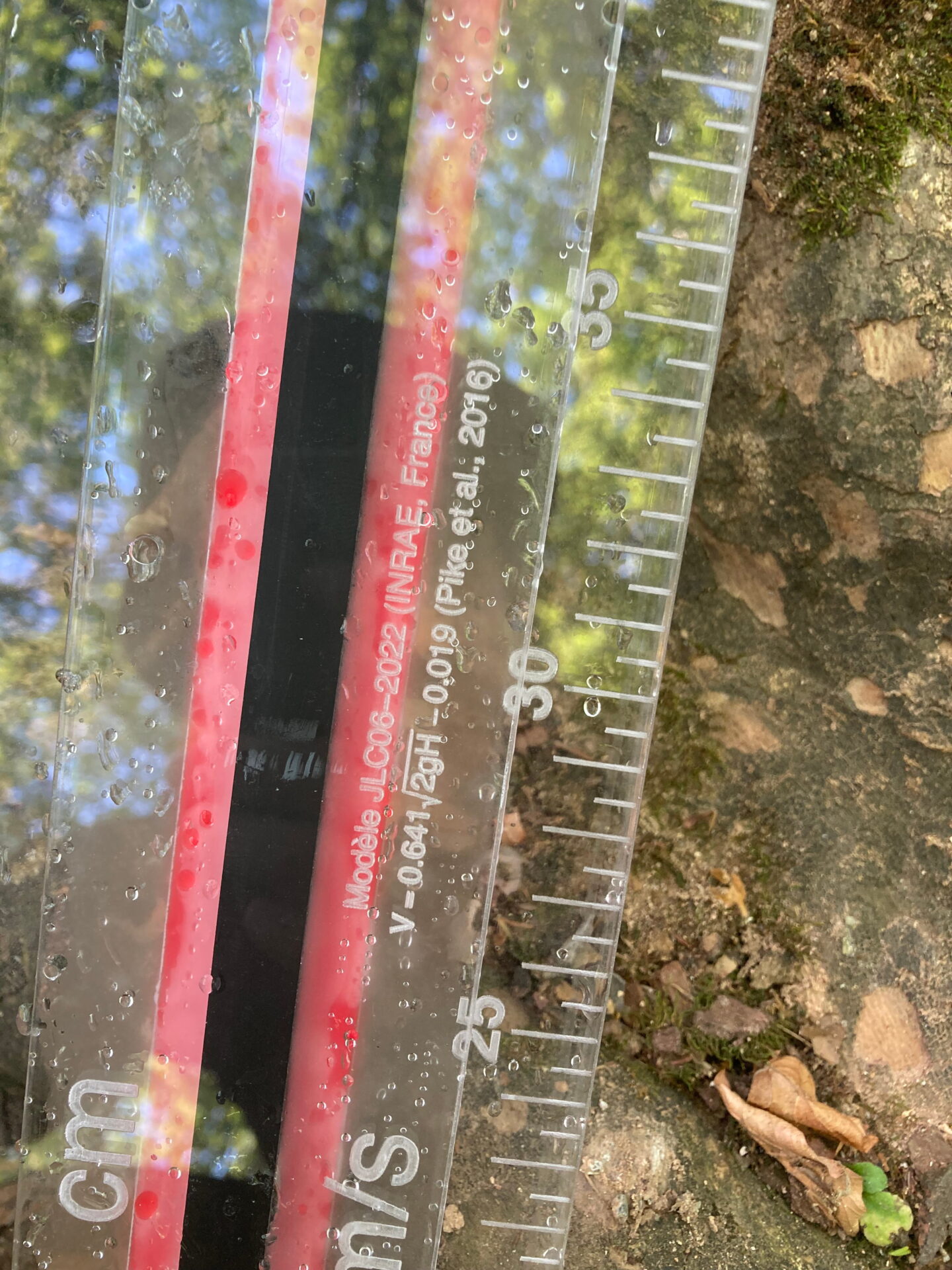
Among the various techniques introduced during the workshop, the Streamgauging Rulers, developed by researchers at INRAE (France), left a particularly strong impression on me. As the name suggests, this method estimates discharge using only a specially designed ruler.
As illustrated below, the ruler is placed perpendicular to the flow, and the head difference (velocity head) generated across the ruler is used to estimate flow velocity. Water depth is then measured to calculate discharge at each measurement point. By repeating the measurements across the river cross-section, the total discharge can be estimated.
Because the ruler has a limited length and requires the operator to enter the river, the method is applicable only under relatively low-flow conditions. Nevertheless, I found it to be a fascinating technique because the equipment is inexpensive, durable, and based on hydraulic principles that can be understood with undergraduate-level knowledge of fluid mechanics and hydraulics. The ruler costs only around ¥20,000–30,000, and I even found myself wishing our laboratory could have one.
The workshop also provided many opportunities to interact with researchers from other countries through discussions during the sessions and conversations over lunch, allowing us to build new international connections.
Meanwhile, Assistant Professor Inoue attended the Master Classes & Short Courses, held the day before the conference. This program consisted of workshops on a variety of topics, where leading experts delivered lectures and engaged in discussions with participants.
Conference Presentations
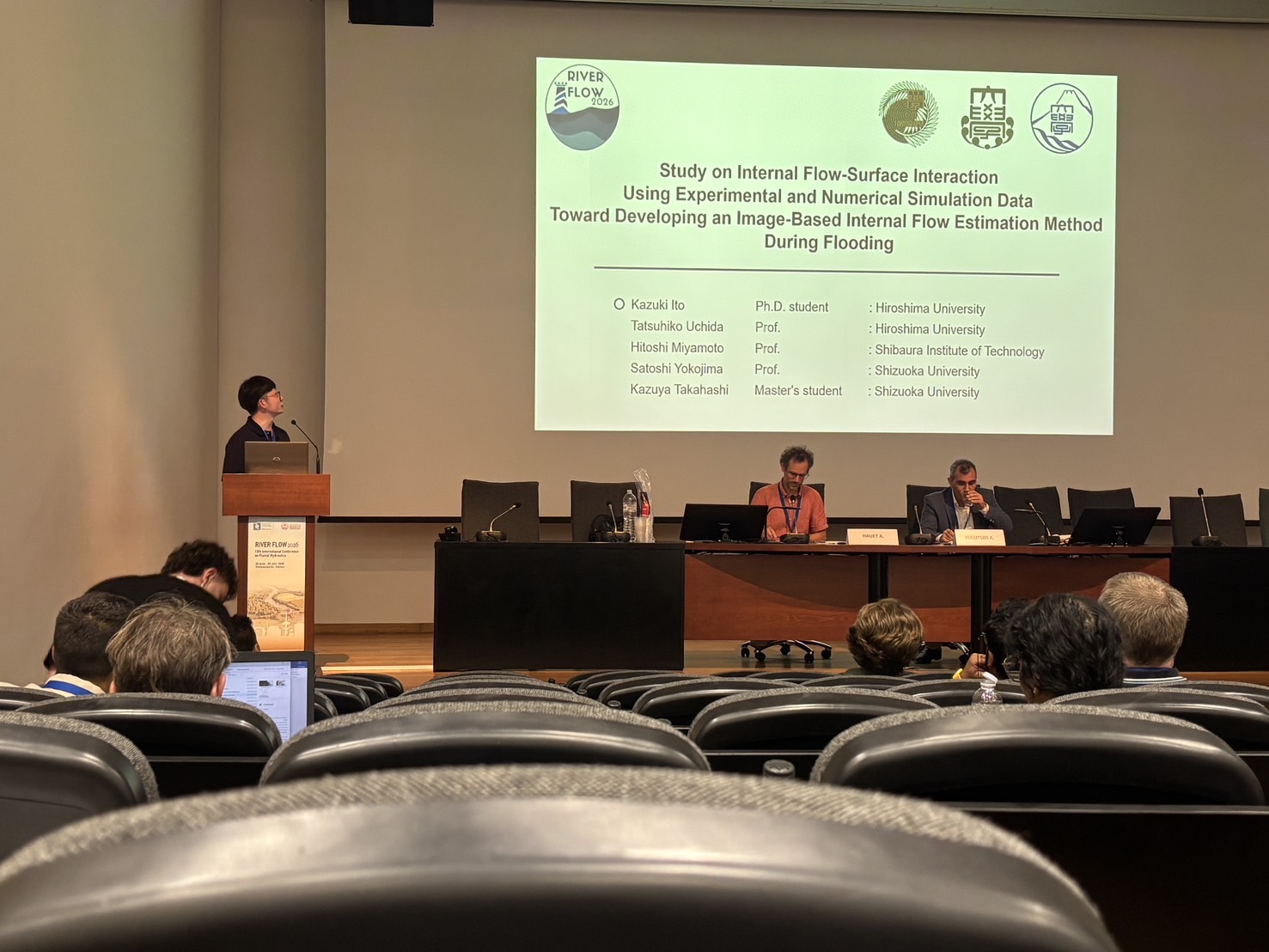
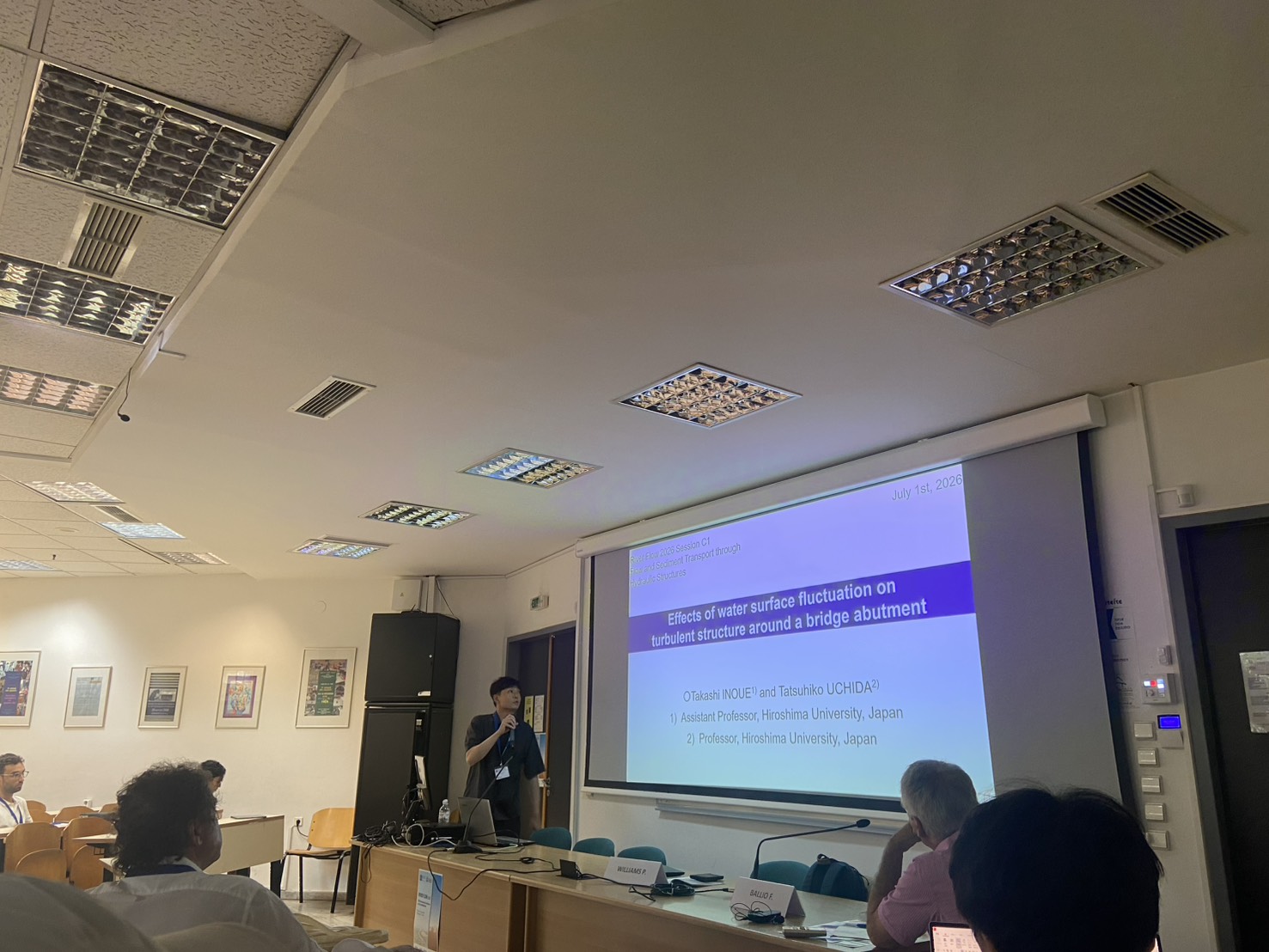
Assistant Professor Inoue gave his presentation on the first day of the conference, while I presented on the second day. Both presentations were oral presentations, and since it was my first oral presentation at an international conference, I was naturally quite nervous.
Fortunately, I was able to finish within the allotted time. During the discussion session, I received questions addressing issues that I had already recognized as important challenges in my research. The experience reinforced the importance of tackling these issues in my future work.
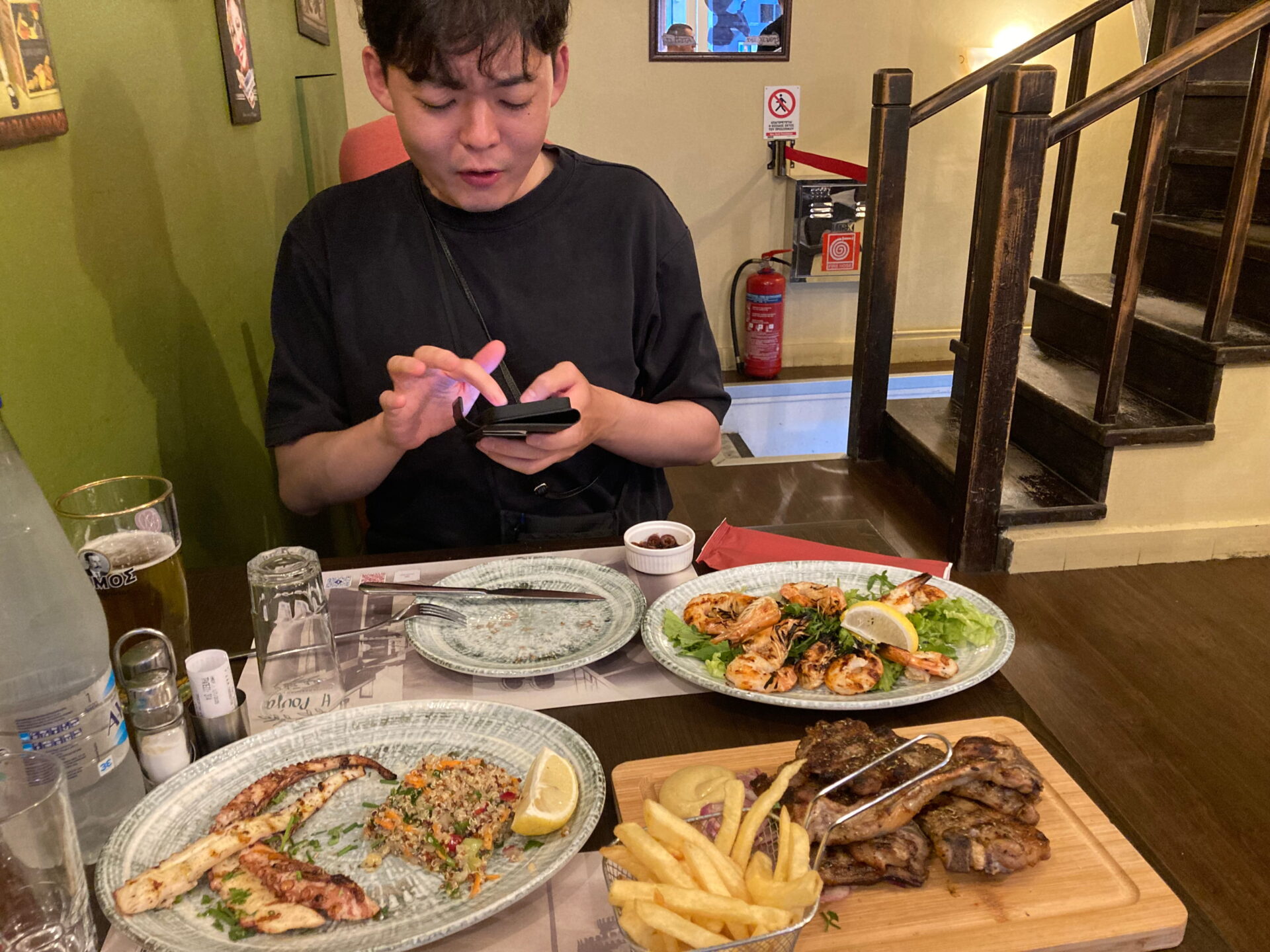
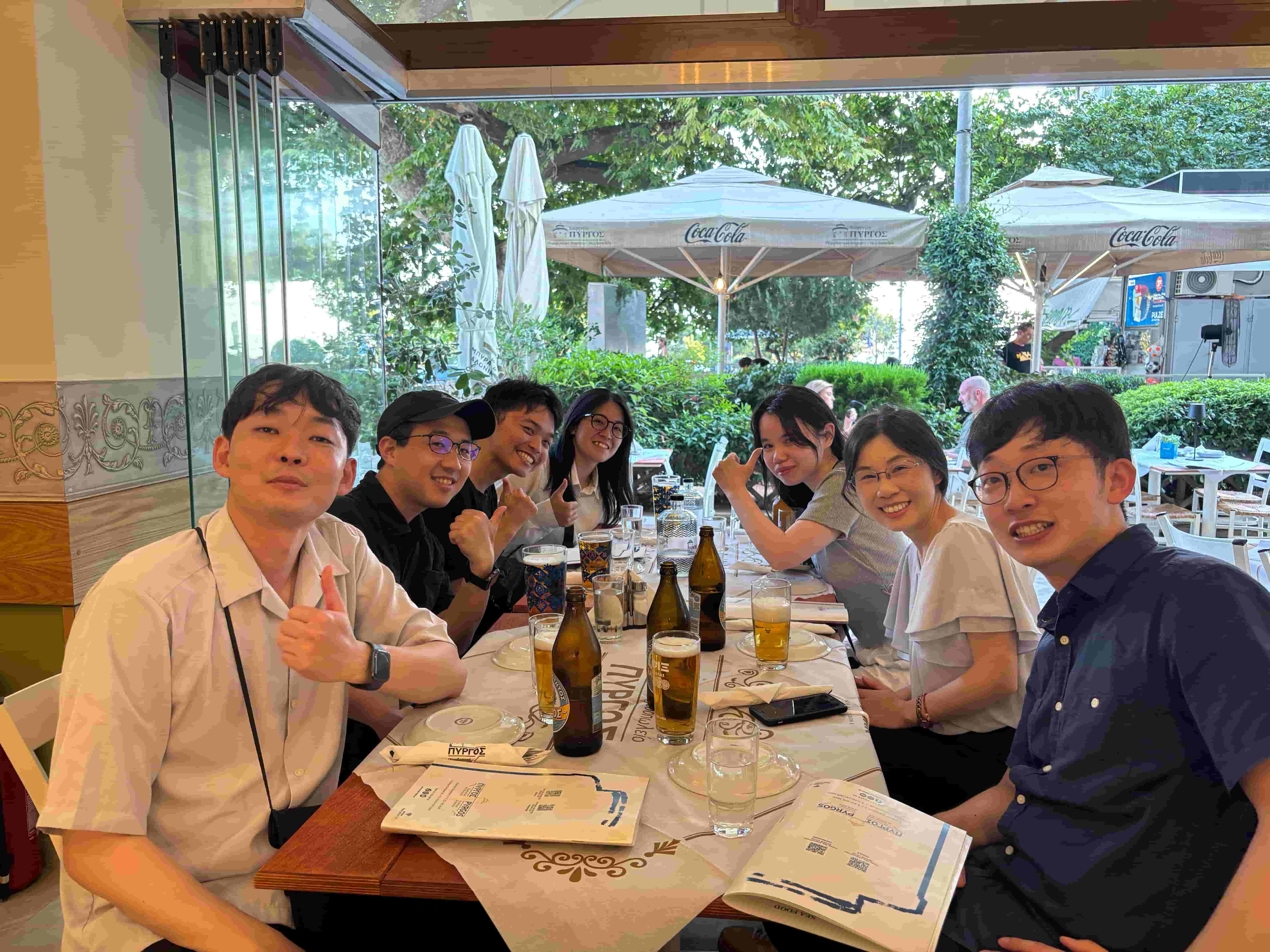
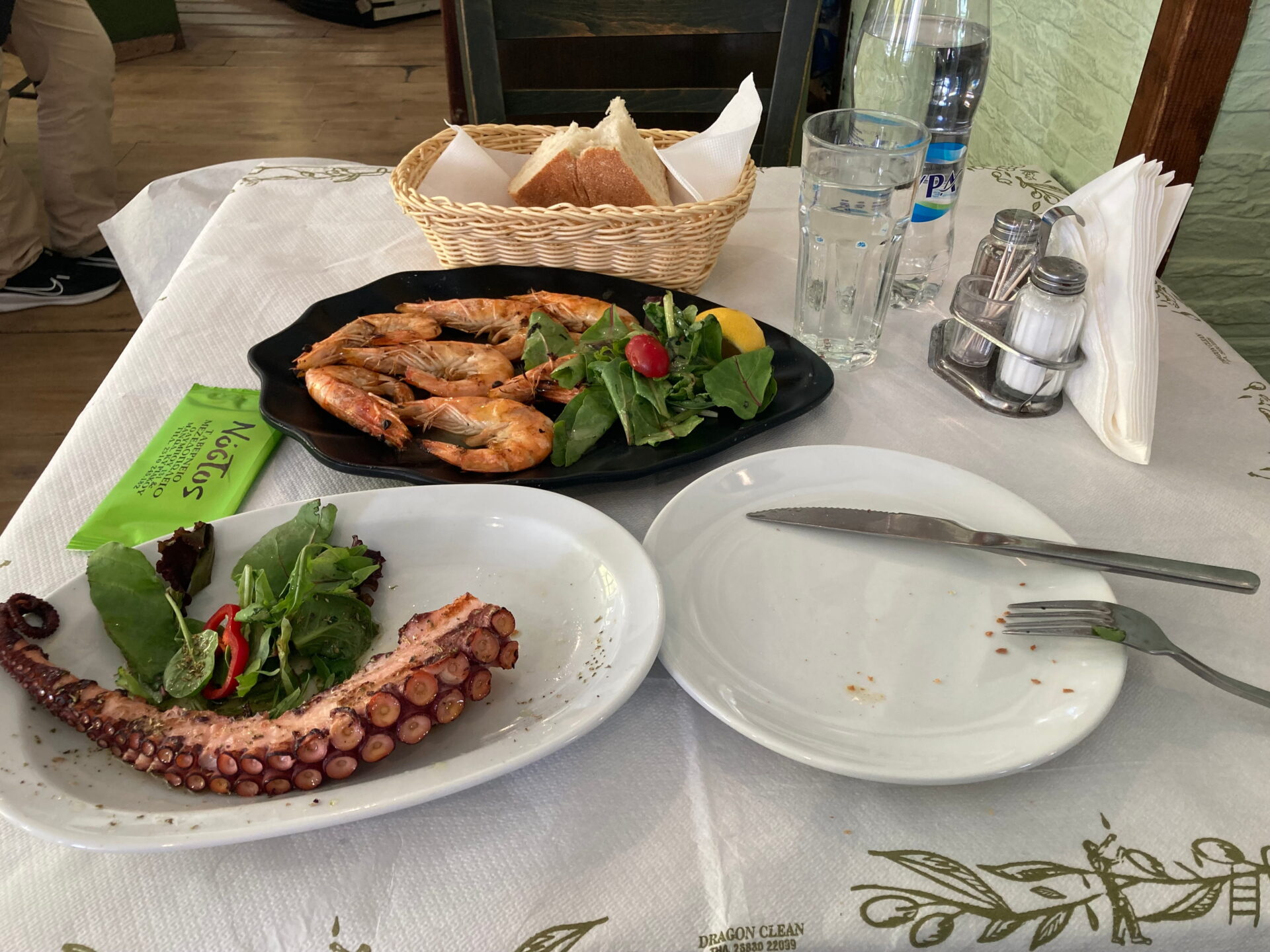
The conference also featured a conference dinner, where we had the opportunity to interact with researchers from universities and research institutes across Japan while enjoying local cuisine. Every Greek dish we tried was excellent, and Greece has certainly become one of the countries I would like to visit again (although my wallet became considerably lighter!).
For me personally, the previous international conference I attended was the AGU Annual Meeting in Washington, D.C., two years ago. At that time, I unfortunately missed my flight. Determined not to repeat that mistake, I paid extra attention to every aspect of my travel arrangements this time, especially my flights.
As a result, I boarded every flight with plenty of time to spare. Besides everything I learned and experienced at the conference, I also felt a great sense of relief and satisfaction that the entire trip went smoothly.
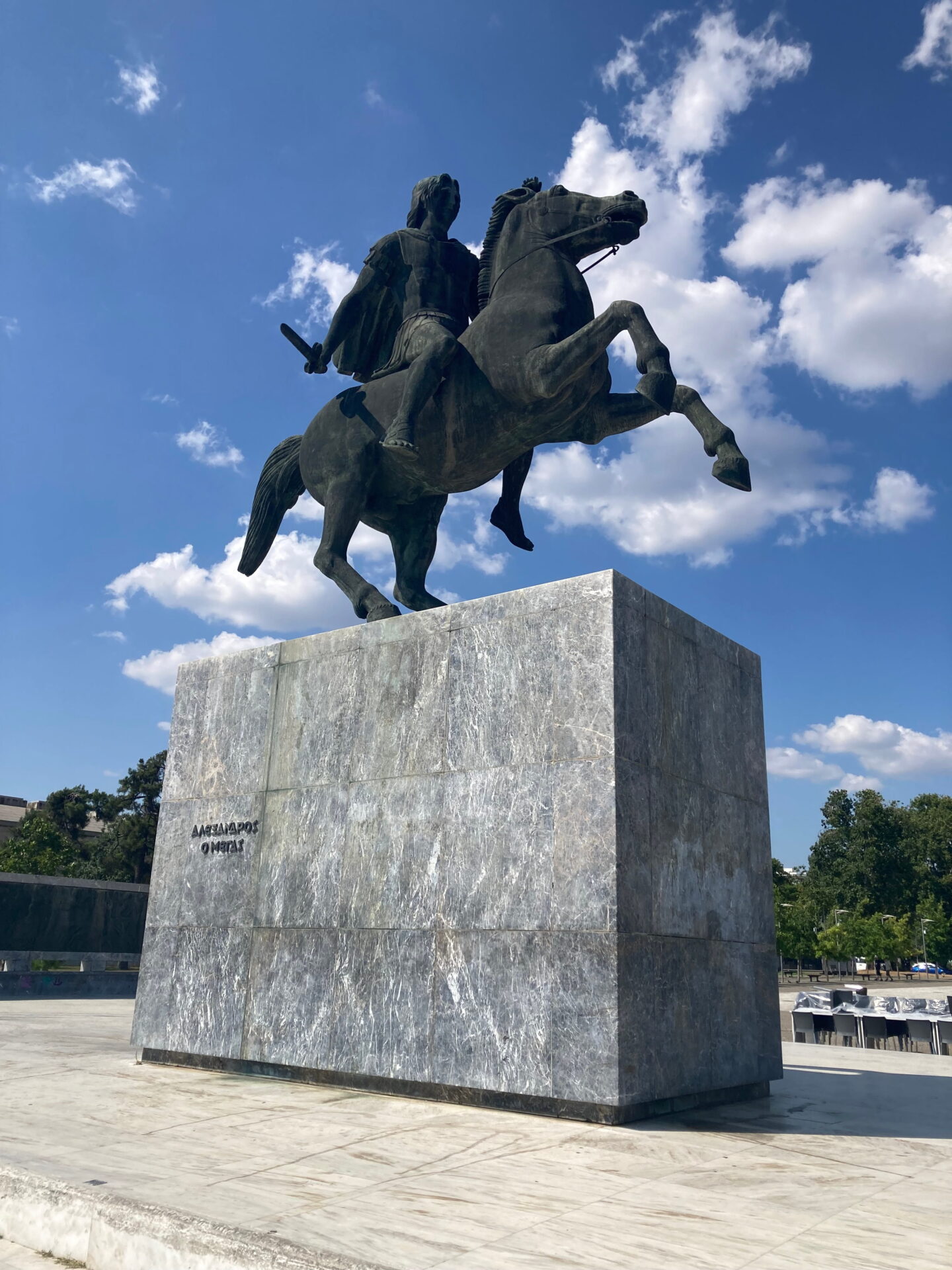
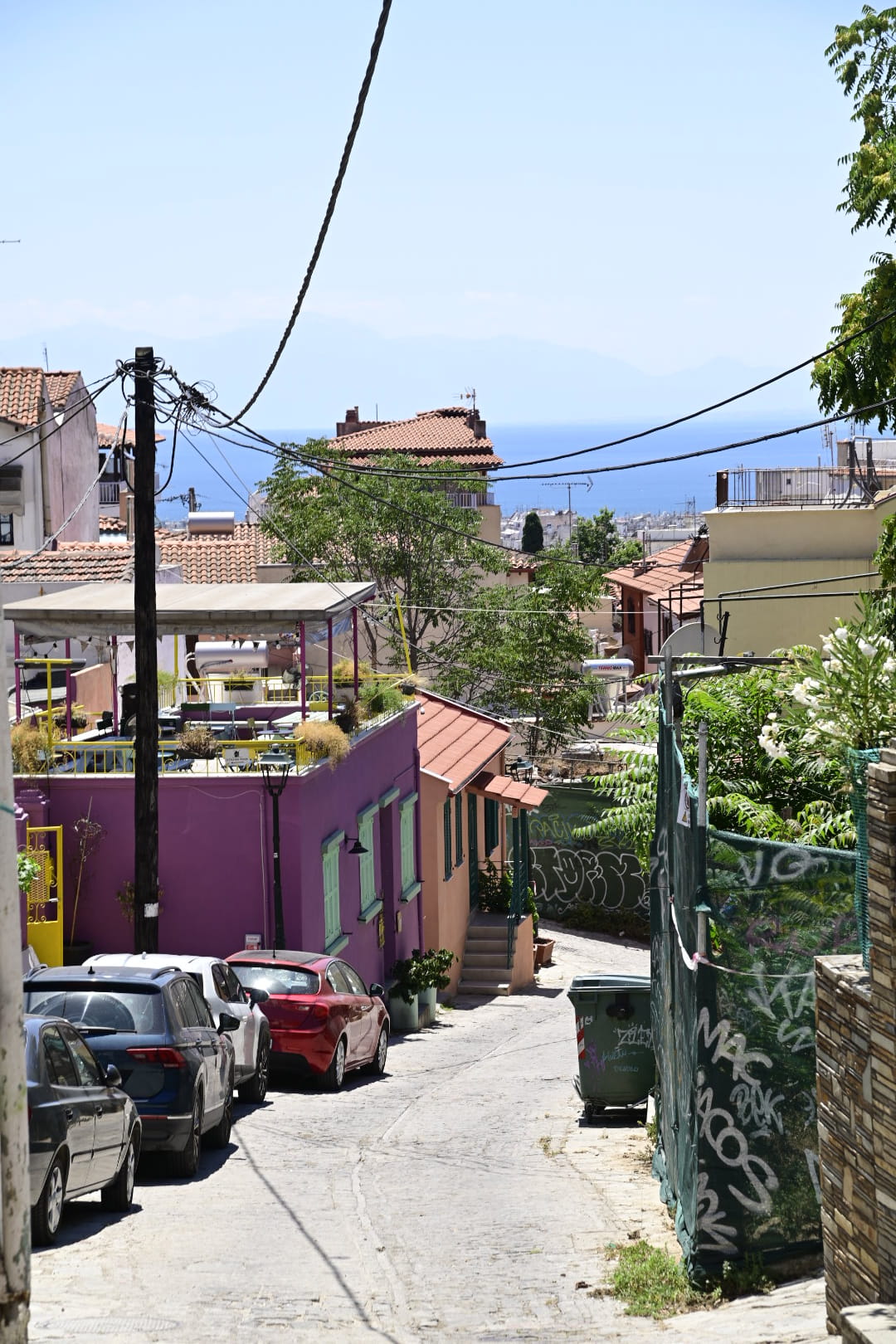
Looking back, River Flow 2026 was a conference where I became much more proactive than I had been at AGU. I actively engaged with researchers, took greater interest in presentations outside my own field, and participated more fully in the research community. The conference significantly increased my motivation for research, and I hope to build on the experiences I gained here to deliver even better presentations and engage in more meaningful discussions at future conferences.
Written by Kazuki Ito